The Bear's Lodge that Became Devils Tower
Gab:
Our education about Native American culture has really just begun. After months of historical sites in the Northeast which made reference to people indigenous to North America only as enemies or problems for early settlers, we arrived in North Dakota and Minnesota to three wonderful sites.
The Knife River Indian Villages National Historic Site and Fort Union Trading Post National Historic Site in North Dakota and Pipestone National Monument in Minnesota have all offered windows into a world that I know far too little about. Each of these places offer hands on teaching about the way certain tribes lived and in some cases continue to live in the Plains.
 We spent an hour inside a recreated earth mound at Knife River, touching buffalo hides, smelling the hot coals on the hearth, and holding the bison scapula hoe that Mandan and Hidatsa would have used to tend their extensive gardens. We spent an hour inside a recreated earth mound at Knife River, touching buffalo hides, smelling the hot coals on the hearth, and holding the bison scapula hoe that Mandan and Hidatsa would have used to tend their extensive gardens.
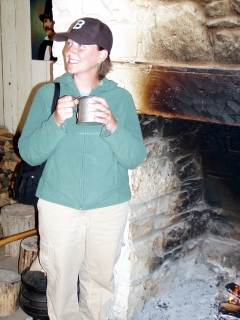
At Fort Union, we drank coffee in the Indian Trade House with a Ranger acting as Clerk. He invited us into conversation and allowed us to browse the goods, just as he would have done with a Chief or representative of one of the several tribes who would have traded with the American Fur Company.
At Pipestone, not only could we watch a fifth generation carver sculpt beautiful pipes from the red stone, we could pick up pieces of the stone and cut and scrape and file to our hearts’ content. We could feel firsthand what made this substance so valuable and this quarry so sacred.
These experiences bordered on overwhelming as we tried to take in every detail, use every sense to increase our knowledge. These places really got it right.
I wish I could say the same for Devils Tower National Monument. Unlike Pipestone National Monument, which reminds you gently, solemnly and frequently that you are on sacred ground, Devils Tower does little to deter disrespect. Once you wade through the throngs of kids (behaving badly for the most part) in the Visitor Center and on the Tower Trail, you may find some signs asking you not to touch prayer offerings left on trees. That’s about it.
How did this formation get its name? What significance does it hold for Plains Indians? Answers to these questions are tucked underneath large signs which boast about the Site’s Voluntary Climbing Closure in June.
During the month of June, climbers are asked to refrain from scaling the sacred rock. June is a time of increased religious ceremonies for Indians at the place they know (and would like others to know) not as Devils Tower, but as Bear’s Lodge, This voluntary program has reduced climbing during the month of June by 85%, something the Park Service is clearly very proud of. Signs announcing their success obstruct views of other museum displays and take center stage in the Visitor Center.
 If the Park Service is so pleased with its cultural sensitivity, why does it allow rock climbing on Devils Tower at all? More importantly, why does it still refer to the formation as Devils Tower and not Bear’s Lodge? If the Park Service is so pleased with its cultural sensitivity, why does it allow rock climbing on Devils Tower at all? More importantly, why does it still refer to the formation as Devils Tower and not Bear’s Lodge?
Some rock climbers care so deeply about their unrestricted access to Devils Tower that they used legal means to ensure their climbing time. A local multiple use group and individual rock climbers sued the NPS in December of 1996, only a few months after the Park Service first enacted the voluntary closure period. The suit made it all the way to the U.S. Supreme Court by March of 2000.
Climbers argued that the one-month voluntary climbing closure infringed upon rights guaranteed to them by the First Amendment. The Supreme Court dismissed the case, saying that climbers failed to specify how they were harmed by the climbing closure. The climbers appealed, arguing that the judgment violated the Constitution’s separation between church and state. The Supreme Court dismissed the appeal because the climbers could still climb whenever they pleased; the ban is voluntary.
So, NPS continues to ask nicely that people refrain from scaling Devils Tower for the 30 days of the year that Plains tribes hold this place, to them Bear’s Lodge, most sacred. We did not see any climbers during our visit. On the whole, they honor the closure. This forum on rockclimbing.com highlights this interesting debate.
The Lakota Sioux and the Cheyenne call it Bear’s Lodge. The Arapahoe call Bear’s Teepee, the Crow call it Bear’s House. That was this place’s name before 1875. At that point, Colonel Richard Dodge, commander of the military escort, named it Devil’s Tower. The Park Service suggests that translation problems led to the erroneous moniker; Dodge thought the Indians believed it to be the place of the bad god.
Why can’t the name change back to the more historically accurate and respectful Bear’s Lodge? Explanations in the woefully small Visitor Center seem to suggest that public familiarity and name recognition is the reason the name has stuck since then and will not change.
NPS fails to recognize that baseball stadiums, huge athletic events, major sites in every city change their name frequently due to adjustments in corporate sponsors or political will. We can handle it. Minute Maid Park in Houston was once known by a now unpopular name, Enron. Hoover Dam was, for a time, not Hoover Dam. NASCAR fans will probably call the Nextel Cup the Winston Cup for a while. It doesn’t happen overnight. But it can happen.
These four national historical sites and monuments offer windows into indigenous cultures. Devils Tower received 396,266 visitors last year, compared to the 142,629 that visited the wonderful sites of Knife River, Fort Union and Pipestone combined. One would hope that one of the most visited National Monuments, America’s first national monument, would rise to the occasion and give guests a proper introduction to the revered site and the people who consider it such. Devils Tower, sadly, falls flat.
|